
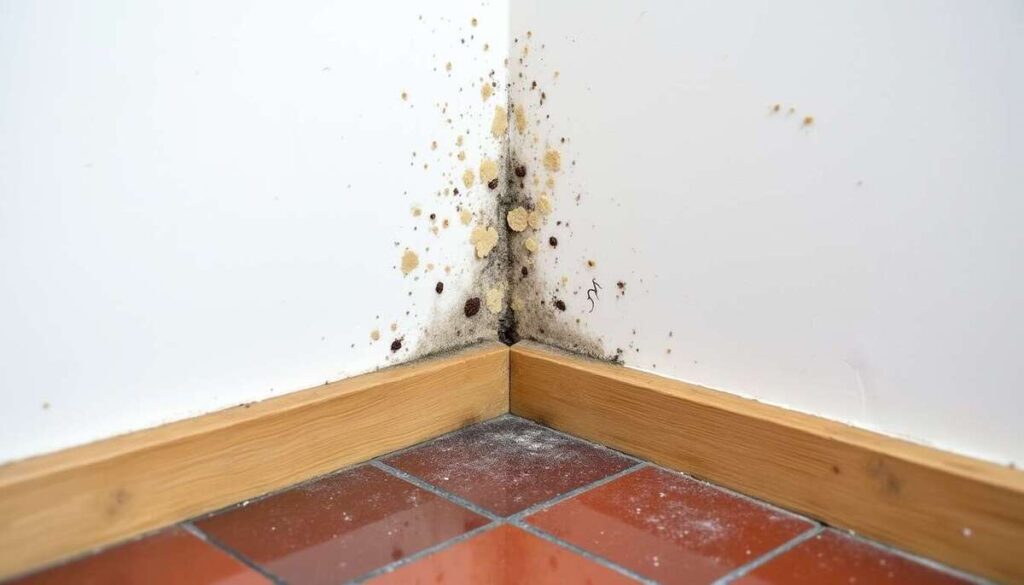
Mold in the kitchen is not merely an aesthetic nuisance; it can also present health risks, particularly for individuals with allergies or asthma. These microscopic fungi thrive primarily in humid, poorly ventilated environments, making our kitchens a frequent host for them.
The causes of mold growth in the kitchen
Excessive humidity
Humidity is the primary catalyst for mold development, originating from various sources:
- Water Leaks: Leaks from faucets, pipes, or appliances can create damp areas conducive to mold growth.
- Condensation: Cooking generates steam that condenses on cold surfaces, increasing the ambient humidity.
Insufficient ventilation
A lack of air circulation hinders moisture removal, creating an ideal environment for mold. Kitchens without windows or with infrequently opened windows are particularly at risk.
Defective building materials
Certain materials, such as wood or plaster, can absorb moisture and become fertile ground for mold if not appropriately treated or maintained.
Understanding these causes is vital in preventing mold growth. However, for those seeking an immediate solution, a clever trick involving a simple sock can be remarkably effective.
How a Simple Sock can combat humidity
The principle of absorption
The sock utilized in this method serves as a moisture absorber. By inserting coarse salt into it, an organic ingredient, it attracts and retains moisture in the air. This process is known as absorption dehumidification.
The advantages of using a Sock
This approach is both cost-effective and eco-friendly. It requires only simple, reusable materials and poses no health or environmental risks compared to certain chemical products.
Now, let us explore how to craft this ingenious tool yourself, using items you likely already have at home.
Making a homemade Dehumidifier with a Sock: instructions
Necessary materials
- Cotton Sock: Cotton is ideal as it allows good air circulation while retaining the salt.
- Coarse Salt: Salt serves as a superb dehumidifying agent due to its water-absorbing capability.
Instructions for crafting
- Take a clean sock and fill it with coarse salt.
- Secure the sock with a tight knot to prevent any salt from escaping.
- Place it in a damp area of your kitchen.
By following these simple steps, you can significantly reduce humidity in your kitchen. But why does this method work better than others?
Why This trick surpasses other methods
Comparison with Electric dehumidifiers
| Aspect | Sock | Electric Dehumidifier |
|---|---|---|
| Cost | Very Low | High |
| Environmental Impact | Low | Moderate to High |
| Complexity | Simple | Complex |
Environmental benefits
Unlike electric solutions, this tip does not consume energy, making it perfect for those looking to reduce their carbon footprint while maintaining a healthy kitchen.
Now that you understand why this method is superior, let us see how to maintain it for long-term effectiveness.
Maintaining your method: what to do when the Salt is saturated?
Identifying saturation
When the salt is saturated, it feels moist to the touch. This indicates it can no longer absorb water and needs to be replaced.
Replacing the Salt
To continue benefiting from its dehumidifying properties, it is recommended to replace the salt every two to three weeks. Simply empty the sock and refill it with coarse salt.
If well-maintained, this method can be used continuously. To maximize its effectiveness, it can be combined with other mold prevention practices.
Combining This trick with other practices for a healthy kitchen
Improving ventilation
Open windows regularly or install a ventilation system to allow air circulation and moisture escape.
Regular maintenance
- Promptly repair any water leaks.
- Regularly clean surfaces to prevent residue buildup that can retain moisture.
By combining this trick with these practices, you will enhance your chances of maintaining a mold-free kitchen.
With a simple and economical approach, it is possible to bid farewell to mold in your kitchen. Utilizing a sock as a natural dehumidifier provides a practical, eco-friendly, and efficient solution. Remember to maintain your device properly and adopt preventive practices for a healthy and pleasant kitchen environment.