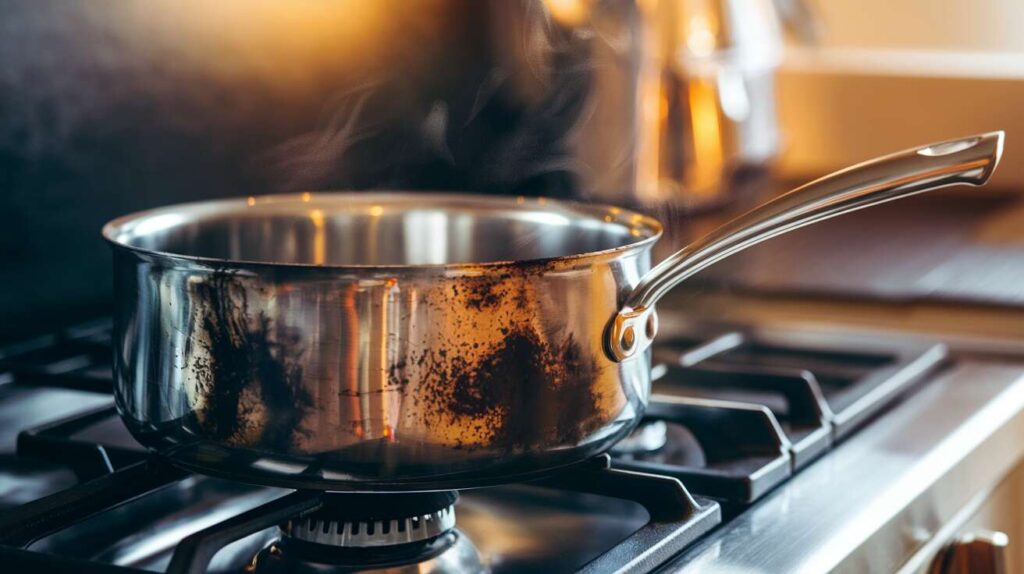
If you’ve ever left a pot on the stove for too long, you know the frustration of discovering a burnt layer at the bottom. Fortunately, there are several natural methods to clean your pans and restore their original shine without resorting to harsh chemicals like vinegar or bleach. Here is a guide to practical and essential tips based on grandmother’s advice.
Why avoid vinegar and bleach for cleaning your pans
The corrosive effects on materials
Vinegar, although natural, is an acid that can corrode the materials of your pots, especially if they are aluminum or copper. On the other hand, bleach, while powerful, can leave harmful residues and damage the surfaces of your pans.
Health and environmental impacts
Using bleach or vinegar for cleaning can have negative effects on your health. Inhaling vapors can irritate your respiratory system. Additionally, these products can be harmful to the environment when flushed down the drains.
Given these disadvantages, it makes sense to explore natural and eco-friendly alternatives to restore the luster of your cookware.
Natural solutions for effective cleaning
Common household ingredients
Natural solutions for cleaning burnt pans are often already present in your kitchen. These everyday ingredients can prove surprisingly effective in removing stains and restoring shine.
Cost-Effective and simple
Choosing natural solutions is not only economical but also straightforward to implement. You can avoid purchasing costly and potentially hazardous chemical cleaners.
Now, let’s discover how baking soda can become your trusty ally for these household tasks.
Restoring shine to your pans with baking soda
A versatile and effective product
Baking soda is known for its myriad of household uses. Its mildly abrasive power allows for cleaning without scratching, and its ability to absorb odors makes it an ideal choice for your pots.
Application method
To use baking soda: sprinkle it on the bottom of the pan, add water to cover by two or three centimeters, then bring it to a boil. Turn off the heat and let it sit for 20 to 30 minutes. Afterwards, gently scrub with a sponge.
Baking soda is already a fantastic starting point, but how about we explore a complementary method using fine salt?
The clever use of fine salt for brilliant results
Salt as a gentle abrasive
Fine salt is a natural abrasive that can help remove burnt residues without damaging your pans. It is particularly effective for stubborn stains.
Procedure
Sprinkle the bottom of the pot with fine salt, add a bit of water, bring it to a boil, and then let it cool before scrubbing. The salt helps detach the embedded particles, making the cleaning process easier.
While salt has proven its effectiveness, let’s see how lemon can be used for an even gentler cleaning approach.
Lemon: a soft yet powerful ally against stains
The natural properties of lemon
Lemon is naturally acidic, making it an excellent cleaner. In addition to disinfecting, it leaves a pleasant fresh scent.
Usage technique
Cut a lemon in half and rub it directly onto the stains. Alternatively, you can juice a lemon and mix the juice with hot water for an extended soak. After a few minutes, the stains should diminish.
With these natural methods, your pans will regain their shine. But how can you prevent the problem from recurring? Let’s now discuss some preventative maintenance tips.
Preventing burns: maintenance tips for your pans
Adopting good practices
To avoid burns, it is essential to adopt certain habits. Never leave a pot unattended on the heat, and always use a heat source appropriate for the size of your cookware.
Regular maintenance
Clean your pans after each use to prevent the accumulation of residues. Use wooden or silicone utensils to avoid scratching the surface.
By applying these tips, you’ll maximize the lifespan of your pans and reduce the risk of annoying burns.
These natural tips for cleaning burnt cookware demonstrate that you do not need to resort to aggressive chemical products. Thanks to simple ingredients like baking soda, salt, and lemon, you can restore your utensils while safeguarding your health and the environment. By also adopting good maintenance practices, your pans will remain in excellent condition for longer.