The fight against food waste has become an unavoidable priority, especially during the summer months when barbecues and picnics often lead to leftovers. According to a study by ADEME, approximately 10 million tons of consumable food are wasted in France each year, equating to nearly 150 kg per person. This situation is particularly alarming given that 1 in 10 people struggle to feed themselves in France.
Food waste is responsible for roughly 8 to 10% of global greenhouse gas emissions. It is estimated that if food waste were a country, it would rank as the third-largest emitter of CO2 in the world, right behind giants like China and the United States. This underscores that each of us has a role to play in reducing our carbon footprint by adopting more responsible food consumption habits.
Here are some simple and effective tips for preserving your leftovers and minimizing waste this summer:
- Meal planning: Before heading to the grocery store, take the time to create a menu for the week. Apps like JOW can make this task easier by considering your dietary preferences.
- Organizing the refrigerator: Use the “first in, first out” principle to ensure that perishable items are consumed before those with a longer shelf life. Place items that need to be eaten soon at the front of your refrigerator.
- Understanding expiration dates: Distinguish between the Use-By Date (DLC) and the Best Before Date (DDM). Many foods, such as yogurt and pasta, can be safely consumed after the DDM has passed.
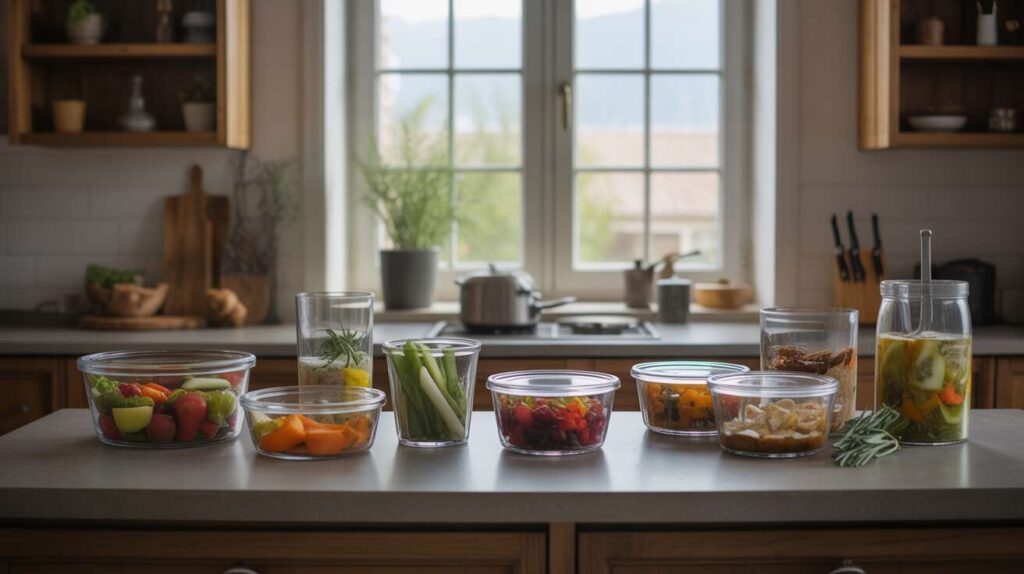
- Storing in suitable containers: Use airtight glass containers for your leftovers. These containers better preserve food freshness and prevent the escape of flavors and moisture.
Understanding the causes of food waste
Economic and cultural factors
Food waste is often influenced by economic and cultural factors. In many households, an abundance of food is seen as a sign of prosperity. However, this perception can lead to over-purchasing and poor management of food stocks.
The supply chain
The supply chain also plays a crucial role. Losses can occur at every stage, from farm to table. This includes losses during harvesting, storage, transportation, and distribution. Improving the efficiency of these processes is essential to reducing waste.
By understanding the causes of food waste, we can better target our efforts to reduce it. Now, let’s explore concrete strategies for meal planning this summer.
Meal planning in summer: practical tips
Establish a weekly menu
Meal planning does not mean restricting your culinary creativity. In summer, take advantage of seasonal produce to create varied and balanced dishes. Establishing a weekly menu allows you to purchase only what you need, thereby reducing impulsive buying.
Utilize meal management apps
Mobile apps can assist you in organizing your meals. They often provide recipe suggestions based on the ingredients you already have, which helps avoid unnecessary food waste.
Effective meal planning is a key step in preventing waste. Now, let’s look at how to properly store your meal leftovers.
Properly store your meal leftovers
Choosing the right containers
Storing food properly is essential for prolonging its shelf life. Opt for airtight glass containers that better preserve food freshness and prevent odor transfer.
Respect storage temperatures
Keep your leftovers at the appropriate temperature to prevent bacterial growth. Refrigerators should be set between 0 and 4°C, and freezers at -18°C for optimal preservation.
By properly storing your leftovers, you can use them later. Now, let’s discover how to optimize their use.
Optimize the use of leftovers
Creative recipes with leftovers
Don’t let your leftovers accumulate in the refrigerator. Instead of throwing them away, consider waste-free recipes. For example:
- Bread pudding: Transform leftover bread into pudding.
- Stale bread cookies: Repurpose bread to create delicious cookies.
- Banana ice cream from overripe bananas: Make a delightful ice cream with bananas that are nearly spoiled.
Practice batch cooking
Batch cooking involves preparing several dishes in advance for the week. This method helps reduce waste by effectively utilizing the ingredients you have on hand.
By optimizing the use of your leftovers, you contribute to the reduction of food waste. Now, let’s explore recycling and composting food waste.
Recycling and composting food waste
Composting at home
Composting is a sustainable method for managing food waste. By composting your peels and scraps of fruits and vegetables, you not only reduce the volume of waste but also enrich your soil.
Participate in recycling programs
Many municipalities offer organic waste collection programs. Participating in these initiatives transforms your waste into valuable resources for community gardens.
Recycling and composting are practical steps in combating food waste. Let’s now consider how to raise awareness among your community about this issue.
Raise awareness about food waste
Community initiatives
Engage in local workshops or events to educate your community about the challenges of food waste. These initiatives provide opportunities to share tips and best practices.
Educate at home
Involve your family in the fight against food waste. Learn together how to make the most of leftovers and adopt responsible consumption habits.
By raising awareness among your peers, you contribute to a collective mindset shift. Every small action counts toward a more sustainable future.
By adopting these simple gestures, you can significantly reduce food waste while saving money. The results are tangible: limiting unnecessary food consumption and managing your leftovers more effectively can make a real difference both economically and environmentally. Every little effort counts, so let us commit together to lessen our impact on the planet.