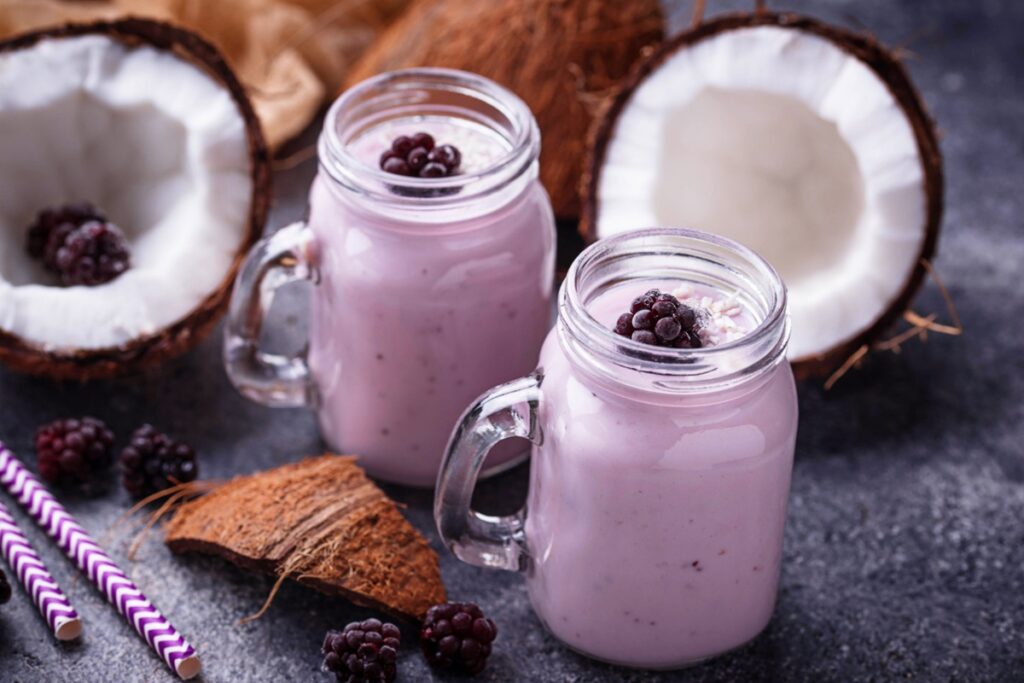
A drink is taking social media by storm: the ube latte.
It’s plant-based, colorful, and just by looking at it, you get the feeling it’s going to be good for you.
For glowing skin and an energy boost, the ube latte seems to be the current healthy drink trend. Let’s take a closer look at what it can really do for our health.
And I’ll tell you in which cases it can actually be beneficial.
The ube latte is a drink made with milk and ube. Ube is a purple tuber, also known as purple yam.
It’s traditionally consumed in Asia, particularly in the Philippines, and is praised for its exceptional nutritional properties.
Chemically speaking, ube has all the makings of a great health ally. It’s rich in antioxidants, especially flavonoids and phenolic compounds, which give it its purple color.
It also contains diosgenin, a compound known for its anti-inflammatory, anti-diabetic, and potentially anticancer effects.
Some say it can even help prevent coronary artery blockage, thus protecting against cardiovascular disease.
However, to be honest, these biological properties, though widely praised, don’t necessarily mean that an ube-based drink will have beneficial effects on our health.
The benefits of compounds like diosgenin are observed in labs at doses far higher than those found in a simple latte.
Watch out for sugar!
Moreover, the ube latte you find in coffee shops isn’t made with pure ube. Ube is often mixed with sweetened condensed milk, syrups, and sometimes even cream.
The result is clear: it’s a very sweet drink, which can contain more than 20 grams of sugar per serving, the equivalent of 5 sugar cubes. With that kind of composition, this drink is more like a soda!
On the other hand, when made with plain or low-sugar milk, the ube latte can be a good alternative to coffee.
For those who exceed three cups a day, this pleasant, caffeine-free drink allows you to keep your coffee break ritual without risking the side effects of too much caffeine, such as nervousness or sleep disturbances.
An ube latte can fit into a balanced diet, as long as you see it for what it is: a treat, not a health drink.
If you make it at home, limit added sugars and choose a lightly sweetened milk to make the most of it.
The purple color is eye-catching, but what really matters is what you put inside.