This widespread bad habit encourages the spread of bacteria in the kitchen. Here’s how to fix it when it’s time to do the dishes.
While toilets and mobile phones are well-known breeding grounds for germs, our kitchens are full of unsuspected microbes.
Sponges, true incubators, harbor more than 10,000 bacteria, including some pathogens like salmonella, according to a 2022 study reported by french site Allo Docteurs.
Frequently touched kitchen items, such as cutting boards, kettle handles, can openers, coffee machine water reservoirs, and pet bowls, are also hotspots for germs.
Finally, our hands are major vectors of cross-contamination, which is why it’s so important to wash them regularly, especially before and after handling raw or potentially contaminated food.
A bad kitchen habit that opens the door to harmful bacteria
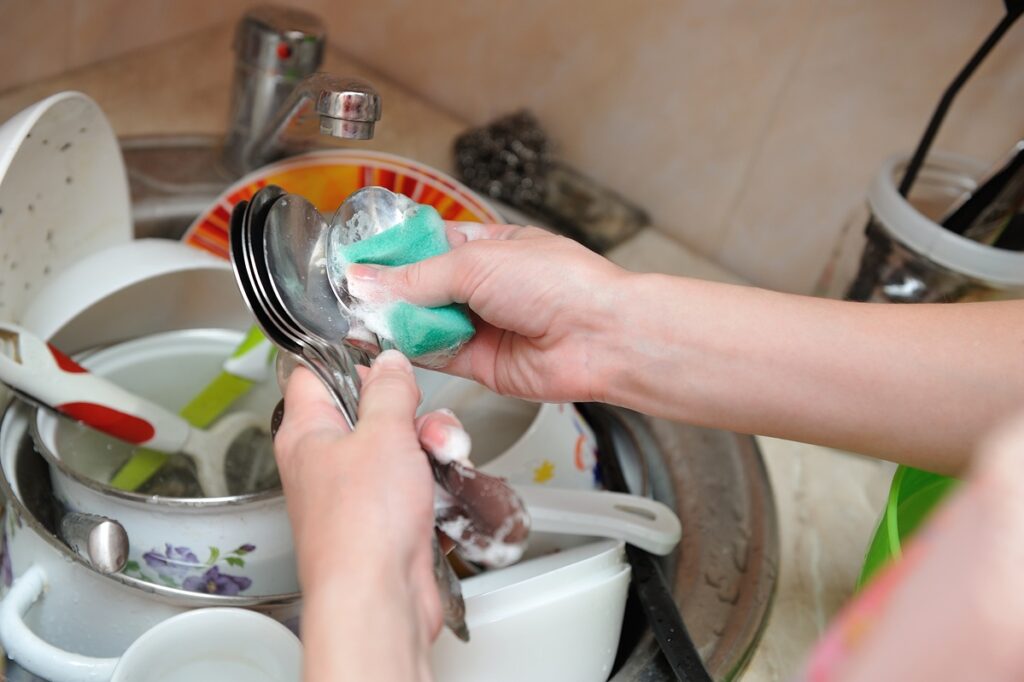
Another bad habit to break: postponing the evening dishes is an open invitation for microbes.
A sink overflowing with dirty dishes quickly becomes a breeding ground for germs, potentially contaminating nearby food and turning your kitchen into a hotspot for foodborne illnesses.
“After two hours in the sink, the risk of food poisoning skyrockets,” warned virologist and social media figure Océane Sorel.
“Dirty dishes should sit in the sink for as little time as possible since it’s a humid environment where bacteria grow rapidly. Plus, if you don’t wash with really hot water, you risk not disinfecting everything,” she added.
To avoid the risk of food poisoning, it is essential to wash the dishes immediately using dish soap and hot water, thereby preventing the spread of microbes in your sink.
Best practices to protect yourself from food poisoning
Bacteria also love countertops and cutting boards. To avoid contamination, these surfaces must be properly disinfected. Using paper towels to remove residues is a good first step, but it’s not enough.
To eliminate microorganisms in the kitchen, using hot water and detergent is strongly recommended.
Océane Sorel’s advice? “You can use diluted bleach, but be careful : it can oxidize your countertop.”
White vinegar, although trendy, has limited antimicrobial effects. It’s not an ideal solution unless left in contact with the surface for a long time, and even then, it doesn’t work on all germs.
“Soap can be effective, but you need to rinse thoroughly afterward,” she further explained.