In a world where food waste has become a pressing issue, mastering the art of preserving fruits and vegetables has become essential for both novice and seasoned cooks. Traditional preservation methods, often overshadowed by modern technology, are experiencing a resurgence due to their proven effectiveness. The goal? To extend freshness, enhance flavors, and retain nutrients. Let us explore these time-honored techniques that will not only help you manage your pantry better but also promote a more sustainable way of consuming.
The mysteries of natural preservation
Understanding degradation
The natural preservation of fruits and vegetables hinges on understanding the mechanisms of degradation. Each product has its own characteristics regarding ripening and decay. Bacteria, light, moisture, and air are the primary factors influencing these processes. To counteract these elements, it is crucial to adapt preservation methods according to each specific product.
The benefits of traditional methods
Traditional methods, such as storing in cool, dry places, have demonstrated their effectiveness over centuries. These techniques help to minimize exposure to elements that accelerate degradation. For instance, using cellars or natural caves is a common practice that guarantees optimal preservation.
Understanding these nuances allows us to discover which fruits and vegetables can thrive in open air without compromising their quality.
Fruits and vegetables friendly to open air
Which products can remain in open air?
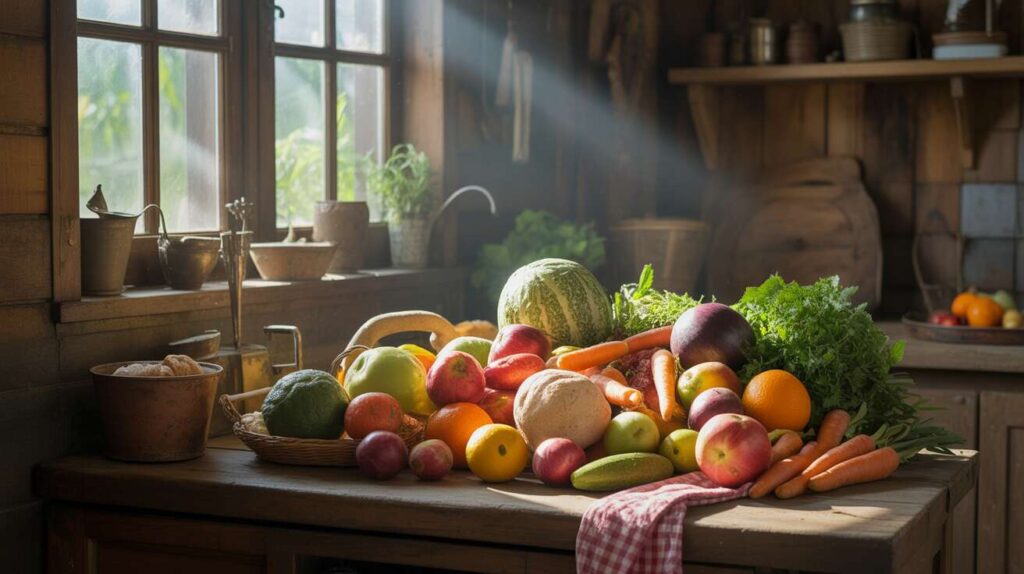
Some varieties of fruits and vegetables benefit from being stored in open air. These include:
- Apples
- Bananas
- Tomatoes
- Aubergines
These foods often develop a more robust flavor when ripened at room temperature.
Precautions to take
While certain fruits and vegetables can be left in open air, it is essential to keep them away from heat sources and direct sunlight. It is also advisable to consume them within a reasonable timeframe to prevent over-ripening.
This exploration of open-air preservation brings us to consider the impact of light on our food.
Light: ally or enemy of your foods?
Effects of light on foods
While light is necessary for plant growth, it can be detrimental to the preservation of fruits and vegetables once harvested. Prolonged exposure to light can result in vitamin loss and accelerate ripening.
Optimizing light exposure
To take advantage of light without harming your provisions, place them in areas where the light is indirect. For instance, potatoes should be kept away from the light to prevent sprouting.
After examining the influence of light, it is worthwhile to delve into the importance of separating foods for better preservation.
Separating for better preservation
The role of ethylene
Some fruits, such as bananas and apples, produce ethylene gas, which speeds up the ripening of other fruits and vegetables. Therefore, it is crucial to keep these fruits separate from sensitive vegetables to extend their shelf life.
Separation techniques
Utilize airtight containers or perforated bags to isolate ethylene-producing products. This simple technique can significantly prolong the freshness of your produce.
Effective separation leads us to question the best temperature for preserving our food.
Room temperature: a viable option?
Benefits of room temperature
Keeping certain fruits and vegetables at room temperature can enhance their flavor and texture. For instance, avocados and melons continue to ripen at room temperature, thus developing their optimal taste.
Products that fare well at room temperature
Items that store well at room temperature include:
- Onions
- Squash
- Potatoes
- Citrus fruits
After exploring temperature options, let us focus on how simple actions can help reduce waste.
Reducing waste through simple actions
The importance of small gestures
Every small gesture counts in the fight against food waste. By adopting simple practices, such as reusing carrot or radish tops in recipes, you maximize the utility of your purchases.
Practices to embrace
Here are some straightforward yet effective actions to implement:
- Wash fruits and vegetables before storing them
- Use glass jars for storing leftovers
- Freeze ripe fruits for smoothies
These tips, while simple, have a significant impact on reducing waste and allow you to enjoy fresh foods for a more extended period.
By embracing these both ancestral and modern methods, you can not only extend the life of your fruits and vegetables but also fully appreciate their flavors and nutrients. These strategies will help you maintain an organized kitchen while effectively managing your food budget.